Restoring alignment in people, in systems, and in organizations.
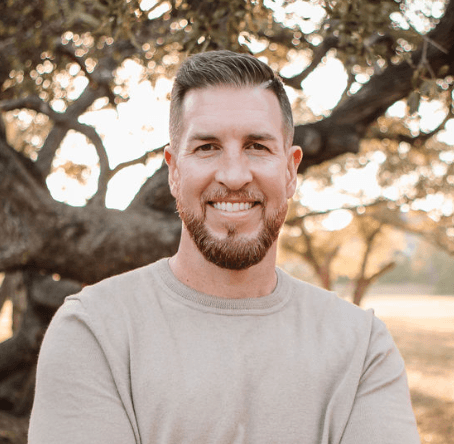
Dr. Steve Tullius is a keynote speaker and organizational strategist who teaches belief transfer: how a speaker, a team, or a leader moves a room, organization, or movement from awareness to action. He built and proved the method across two decades and 10,000+ workshops, $12M in audience-tested marketing, and now teaches it to founders, executives, sales teams, organizations, and association audiences across industries.
The Clinician
"We are sitting on something powerful. We are not communicating it well enough to matter."
Steve entered chiropractic with the conviction that the body is self-organizing and self-healing, and that the nervous system is the master control system. Two decades in practice confirmed it. Patient after patient walked in skeptical and walked out functioning at a level they had been told was impossible.
But a quieter pattern was forming alongside the clinical wins. The work itself was undeniable; however, the translation of the work into a story that the public could understand was broken. People needed the care they would never seek out, because nobody had taught them why it mattered. Strong clinical outcomes were not the rate-limiting factor on the profession's reach. Belief transfer was.
This was the clinician decade. Day after day, room after room, the same conversation: explain the nervous system, name the interference, describe what the body does once the interference is removed. The work landed every time it was delivered. The reach problem was upstream of the work itself.

The Operator
"The problem is not demand. The problem is belief transfer at scale."
After two decades in practice, the pattern was clear. Strong clinical transformations, but a public that, at best, saw the work as only positive for a limited number of problems. There was a massive communication gap between what the care actually does and what people believe it does. The clinical answer was solid. The belief transfer was broken.
Steve embarked on a journey that led to over 300 workshops delivered to the public, where he obsessed over reverse-engineering this belief transfer problem. When he had perfected the attraction systems and belief transference principles, Waitlist Workshops became the answer not only to his own problem but also to a profession's. Now this turnkey workshop marketing system for mission-driven professionals, built on principle-based methodology refined room by room, is transforming practices and lives around the world. By 2024, the company had supported more than ten thousand workshops and over twelve million dollars in audience-tested marketing. The mechanics worked. Show rates, conversion rates, retention rates. Real numbers across hundreds of practitioners.
But the discovery underneath the numbers was bigger than the playbook. The single rate-limit on conversion was never information. It was belief in the speaker's ability to deliver. Solve that and the rest of the funnel follows. This was the operator decade. Steve was in the lab, refining the method, watching it work across the field, and his obsession shifted to, "Why were I and other individuals able to move an entire room but others consistently struggled with it?" Or in other words, how do we scale this beyond one superstar operator and make it land across as many people as possible, in as many domains as possible

The Strategist
"Restore alignment at the level of systems and movements, not just rooms. Prove the method where the stakes are real."
The operator decade proved the method. It also exposed the ceiling. One operator, even a refined one running a national platform, could not move a category by themselves. The leverage was no longer at the room level. It was at the platform level. The principles that moved a workshop room also moved an organization, an institution, and a movement. The work now happens there.
In 2024 Steve stepped into a new register. Less direct delivery, more system design. Less individual rooms, more institutional architecture. The same belief-transfer principles applied across higher-altitude work: organizations repositioning a category, leadership teams realigning around a single thesis, professional associations rebuilding their narrative for the next generation.
The proving ground is the profession he came from, which is actively being repositioned around the principle-based model. The roles inside that effort are platform-level: institutional architecture, policy work, and the production of the next generation of practitioners. The work itself is method-level. The same principles that move a room move a movement. The method scales because the platform scales.

Built. Tested. Deployed across rooms, teams, and organizations.
The method was forged inside one profession, but the principles transfer. Belief moves rooms the same way, whether the room is a financial advisor's seminar, a sales team's product launch, an agency owner's pitch, or a CEOs leadership of their team.
Two decades developing and refining the operator stance behind the method.
Workshops Steve personally delivered, room by room, before training anyone else to do it.
Workshops supported through the platform he founded across the field he came from.
Ad spend run in front of real audiences and instrumented to outcome. Real numbers, not theory.
Audience-to-buyer conversion the method can produce at scale when the operator runs it correctly.
Steve also serves as Chairman of the Board of Trustees at Sherman College of Chiropractic and co-chairs the MAHA Chiropractic Working Group.
Questions, answered.
- Who is Dr. Steve Tullius?
- A keynote speaker and organizational strategist who teaches belief transfer: how a speaker, a team, or a leader moves a room from awareness to action. He has spent over 20 years in practice and personally delivered more than 300 workshops.
- What is belief transfer?
- Belief transfer is the discipline of moving an audience to adopt a belief and act on it, not just absorb information. The talk is a bridge to transformation, not a transfer of facts. It is the difference between a room that nods and a room that decides.
- What is the Belief Transfer Method?
- Five principles in causal order: identity before mechanics, transformation not information, the close is an offer, buyers not browsers, and the message scales through system. Skip one and the next will not hold.
- How do I book Steve to speak or for a podcast?
- Book through the Speak page or the Contact page. Steve delivers four signature keynotes on belief transfer and joins podcasts as a guest, reading the room and shaping the content to the audience the show serves.
- What is the difference between Train, Advise, and Speak?
- Speak is the keynote, and podcasts. Train installs the Belief Transfer Method into a team, cohort, or organization. Advise is selective 1:1 and leadership-team work for the operator at the top.
You have the message. The room is ready.
If you are building a movement, a method, a clinic, a brand, or a body of work that the world needs to believe in, the training is for you. Inner game before mechanics. Transformation before information.
Grab a time with Steve.
Pick a slot below. Thirty minutes on the room, the team, or the category you are trying to move.